


MICHAEL 1BC





 Description
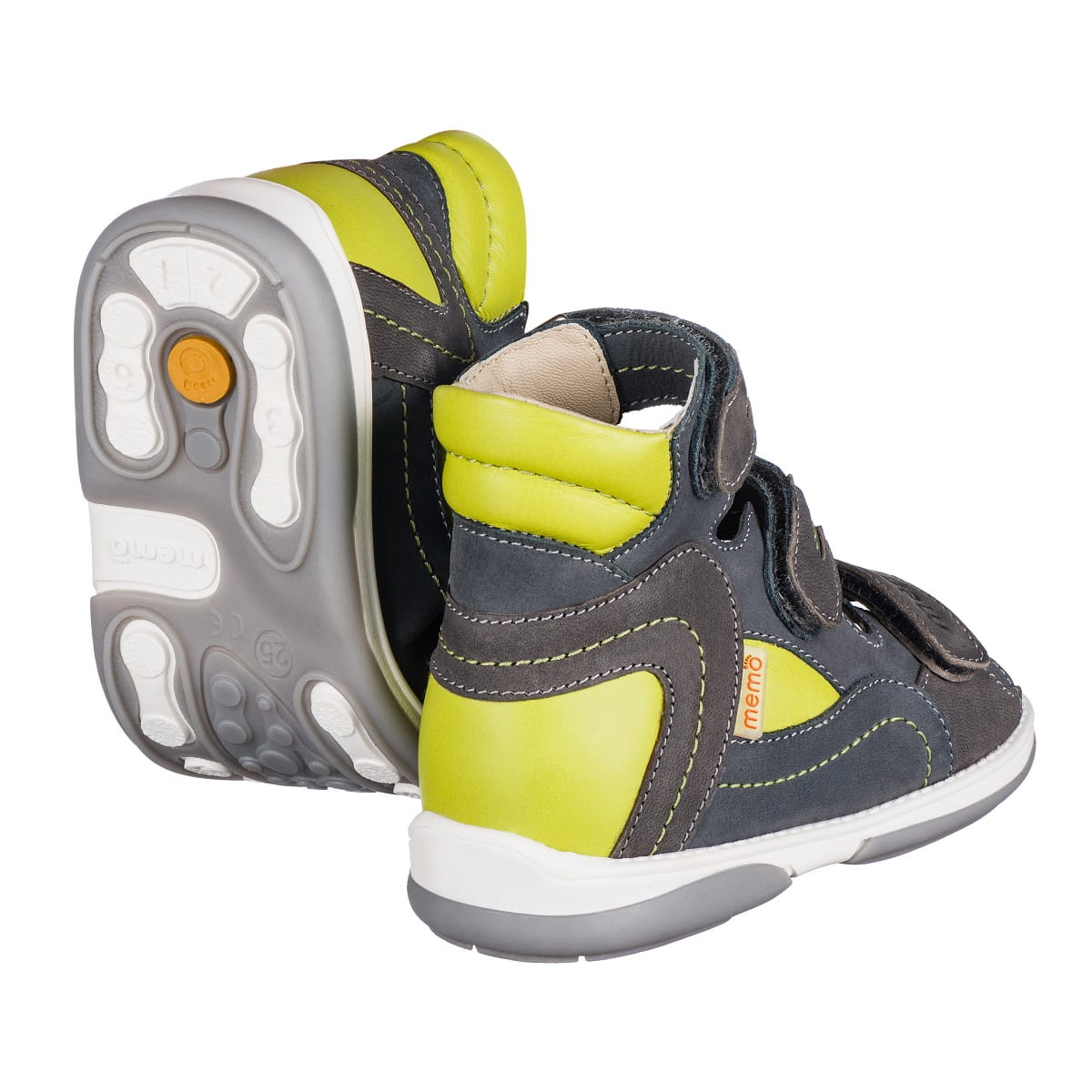
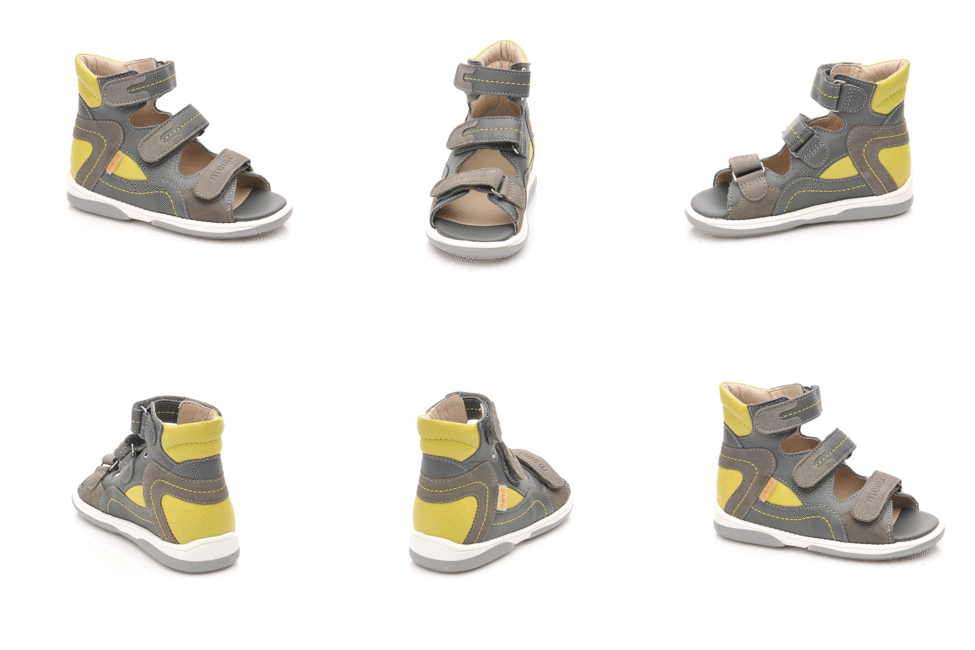
Memo sandals with a high-cut upper that have prophylactic properties – the Thomas heel, a stiffened thermoformable heel, the diagnostic Memo sole. A stylish combination of natural leathers.
Size: 22-31
Find out more:
How to choose shoe size?
Memo construction
Corrective exercises
Instructions for use
MEMO DIAGNOSTIC AND CORRECTIVE FOOTWEAR
Revision and date: 2 / 15 June 2026
Product description
MEMO Diagnostic and corrective footwear is a medical device available as children’s footwear designed to aid in the prevention, stabilisation and correction of the alignment of the feet and lower limbs. Depending on the model, the footwear can be used with appropriate orthotic insoles and may feature a diagnostic sole that allows the distribution of weight on the foot to be monitored whilst walking.
The sole is the key diagnostic feature of MEMO footwear. Six numbered zones with raised tread strips have been identified on its surface and on the heel. Monitoring the wear and tear of diagnostic features can assist in assessing foot alignment and selecting insoles, but it is no substitute for an examination or consultation with a specialist.
Product performance characteristics
Correctly fitted footwear helps to stabilise the foot and – when used in conjunction with the recommended insoles – can help to correct misalignments of the feet and/or knees. Once the correct insole has been selected, it is recommended that the child wears MEMO footwear in accordance with the specialist’s or guardian’s instructions. The duration of use of the insoles depends on the child’s age, the severity of the condition and the specialist’s recommendations.
Diagnostic sole zones
- Zone 1 – normal zone: indicates normal wear. The product serves a preventive purpose.
- Zone 2 – risk zone: may indicate a risk of a defect or disease and the need to use grey insoles. If, whilst using the footwear and grey insoles, the wear does not return to the normal range, you should use orange insoles or consult a specialist.
- Zone 3 – dysfunction zone: this may indicate the presence of a foot and/or knee problem. You should use the orange insoles and keep an eye on the wear and tear on the sole. If the wear does not return
to the normal range, a consultation with a therapist is recommended. - Zone 4 – zone of significant dysfunction: this may indicate the presence of a foot and/or knee abnormality. You should use the orange insoles and consult your doctor or physiotherapist.
- Zones 5 and 6 – zone of significant dysfunction: this indicates the need for medical or therapeutic consultation.
Intended use
This product is intended for the prevention, support of stabilisation and correction, and the monitoring/functional diagnosis of foot alignment in children and adolescents, particularly in cases requiring assessment of lower limb biomechanics.
Therapeutic indications
- the need for the prevention of postural defects and foot alignment problems in children and young people,
- biomechanical disorders of the hip, knee or ankle joints requiring correction or stabilisation,
- knee valgus,
- foot valgus,
- the need to wear shoes with arch support and respectively fitted orthotic insoles.
Target patient group
The target group consists of children and adolescents during their growth and development, who require prevention, stabilisation, correction or monitoring of the alignment of their feet and lower limbs. The choice of size, model and insoles should take into account the patient’s condition, age, body weight, activity level, the severity of the defect and the specialist’s recommendations.
Intended users
This product is intended for use by a child under the supervision of a parent, guardian or adult. Choosing the right footwear and insoles may require the assistance of a medical sales representative, a physiotherapist, a doctor or another healthcare professional. This product is intended for non-professionals.
Contraindications
- damaged, irritated, injured or diseased skin on the feet in areas that come into contact with footwear,
- active inflammation, ulcers, oozing wounds, skin or nail infections affecting the feet,
- known hypersensitivity or allergy to footwear materials, in particular natural leather, textiles, plastics, dyes or finishing agents,
- pain, significant pressure, circulatory problems or other symptoms requiring individual assessment by a specialist,
- the need for custom-made orthopaedic footwear if standard MEMO footwear has not been recommended by a specialist.
Special warnings and precautions for use
- Do not use the product directly on bare skin. Footwear should always be worn with a sock or other textile covering that is respectful of the foot's needs, clean and dry.
- If you experience redness, laceration, pain, a burning sensation, itching, swelling, a rash, blisters or any other signs of irritation or an allergic reaction, stop using the product and consult a doctor or other healthcare professional.
- Do not use this product on damaged or diseased skin.
- The maximum allowable clearance in footwear should not exceed 1 cm. Shoes that are too big do not fulfil their orthopaedic function properly and may increase the risk of laceration or falling.
- Footwear must fit properly to ensure a comfortable use. You should not buy or wear shoes that are too big or too small.
- The diagnostic sole is intended for reference and illustrative purposes only. It does not substitute a consultation with a doctor, physiotherapist or other specialist.
- If you notice excessive or unusual wear in a particular area of the sole, it is advisable to consult a professional.
- Orthotic insoles should be used in accordance with a specialist’s advice or the information provided when selecting footwear. An incorrectly chosen insole may cause discomfort, pressure or impair the performance of the footwear.
- Do not alter the structure of the footwear, the soles or the insoles yourself. Do not use the product if it is damaged, misshapen, excessively worn or no longer fits properly.
- Avoid getting the product wet, high temperatures, direct sources of heat and prolonged exposure to sunlight.
- This product is not safety footwear or sports footwear intended for activities requiring specialist safety footwear.
Possible side effects and residual risks
When used correctly, the biological risk has been assessed as acceptable for the intended use,
where contact with the skin occurs mainly indirectly through a sock. Possible side effects include localised lacerations, pressure, discomfort, skin irritation or an allergic reaction in sensitive individuals. If you experience any such symptoms, stop using the product and consult a specialist.
How to use the product
- Before using the footwear for the first time, check that the size and model are correct and that the product is not damaged.
- Wear the footwear only over a sock or other suitable textile foot covering; do not wear it on bare skin.
- Put on and take off your shoes after undoing the laces or unfastening the fastenings.
- Once you have put your shoes on, tie the laces properly or fasten the fastenings so that your foot is secure but not constricted.
- If insoles are used, ensure that they are positioned correctly, do not crease and do not cause localised pressure.
- Whilst using the footwear, observe the child’s comfort, the condition of the skin on their feet after removing the footwear, and the wear pattern on the diagnostic sole.
- Change the shoes you wear every day, or allow them time to dry out and let any moisture escape.
- Use the footwear for its intended purpose and in accordance with the specialist’s recommendations.
Composition and technical specifications
The materials used vary depending on the model and version of the footwear. MEMO products may, in particular, incorporate:
- natural leathers: goatskin, sheepskin and cowhide, including nappa, nubuck, suede and lining leather,
- textiles, microfibre and finishing materials,
- faux fur/insulation in selected versions – a blend of acrylic and polyester fibres,
- TR/TPE thermoplastic sole materials,
- accessory or structural components made of plastics, including ABS, depending on the product’s design.
This product is not sterile, does not contain any medicinal substance and is not intended for sterilisation. The specific model, size, catalogue number, LOT number, date of manufacture and UDI code are shown on the label or packaging.
Maintenance and cleaning
- Full-grain leather: after cleaning the shoes, apply coloured polish as intended and to match the colour of the upper. Once the polish has been absorbed, polish the shoes with a soft-bristled brush or a flannel cloth until they shine.
- Nubuck and suede leather: after cleaning, use a spray-on waterproofing product designed for refreshing nubuck and suede leather, matching the colour of the upper. The use of shoe polish or cream is not recommended.
- Microfibre / trainers: clean with a slightly damp cloth. Do not allow it to get soaked. Dry away from sources of heat. Do not machine wash.
- Do not wash leather shoes in the washing machine. Hot water, detergents and the spin cycle cause the condition of the shoes to deteriorate and result in a loss of their original shape, appearance and durability.
- Do not use harsh detergents, solvents, bleaches or disinfectants not intended for use on footwear materials.
- If your shoes are very wet, do not dry them in the immediate vicinity of radiators, tumble dryers or other heat-emitting appliances. Untie or unfasten the shoes, stuff them with paper and leave them to dry at room temperature.
- Check the condition of the sole, upper, lining, fastenings and insoles regularly. Do not use the product if it shows any cracks, the sole has come away, there are sharp edges, the lining is damaged, or the product is misshapen or no longer fits properly.
Storage and transport
- Store in a dry, clean and well-ventilated place at room temperature.
- Protect from humidity, water, dirt, high temperatures and direct sunlight.
- Transport in packaging that protects against deformation, moisture and mechanical damage.
- Do not store shoes whilst they are wet or in sealed bags where they cannot dry out.
When the product should no longer be used
- when footwear is too small, too big or does not fit properly,
- if you experience pain, pressure, lacerations, an allergic reaction or skin irritation,
- if the sole has come unstuck, or if there are cracks, the upper has become misshapen, or the lining or fastenings are damaged,
- when the components of the diagnostic sole are worn to such an extent that further observation is no longer possible,
- when a specialist recommends a change to the method of orthopaedic care.
Procedure in the event of a defect or a complaint
If a defect is discovered, please return the footwear to the point of sale or contact
the manufacturer. Please enclose proof of purchase and a description of the defect with your claim. Claims will not be accepted for natural wear and tear of the product, mechanical damage caused by the user, the effects of improper maintenance, or footwear purchased in the wrong size.
Disposal
The used product must be disposed of in accordance with local environmental and waste management regulations. If the product is contaminated with biological material or may pose a hygiene risk, follow local regulations regarding potentially contaminated waste.
Reporting incidents
Any serious incident involving the product must be reported to the manufacturer and to the competent authority of the Member State in which the user or patient resides.
Important notice
The product must be used in accordance with these Instructions for use. The manufacturer is liable for the safety and performance of the product only if it is used in accordance with its intended use and is properly chosen, stored, cleaned and maintained. The Instructions must be kept for the lifetime of the product.
Manufacturer:
mdh Sp. z o.o.
ul. Maratońska 104
94-007 Łódź
tel. +48 42 674 83 33
e-mail: mdh.info@meyragroup.com

 Related products


Product reviews (0)


All reviews (positive and negative) are displayed. We don't verify that they come from customers who have purchased the product.